

If you are a company that leads with a physical storefront, a purely online e-commerce, or a wholesaler that has a retail component, the control of your sales, inventory and procurement is all equally important. This level of control is only possible with a robust ERP that allows for all retail channels to flow seamlessly into a centralized system.
At aclaros, our deep industry expertise allows us to help all types of businesses requiring comprehensive retail ERP software solutions. The types of gaps these companies are looking to fill include real-time inventory management, simplified e-commerce integration, and streamlined point-of-sale systems.
In this retail ERP guide, we’ll cover the top retail ERP systems and tools that keep your technical landscape manageable and operations efficient.
ERP Software for Retail Businesses Guide
- Introduction to Retail ERP
- Businesses that Need Retail Enterprise Software
- Best ERP for Retail Businesses
- Benefits of SAP Retail ERP for Retail Operations
- Features of Retail ERP Systems
- SAP Business One Retail Case Study
- How to Choose the Right ERP Software for Retail
- Start Your Free SAP Retail Demo with aclaros
- FAQs
What is Retail ERP?
Retail ERP refers to a type of enterprise resource planning software specifically designed to address the unique challenges of the retail industry. Unlike traditional ERP systems, retail ERP solutions integrate essential functions—sales, supply chain, warehousing, finance, and customer relationship management—into one centralized platform. This type of retail software ensures real-time inventory visibility, seamless POS integration, and better seasonal demand management.
Today’s best ERP for retail businesses provide flexibility and scalability that retailers need to adapt and grow. By bringing all retail industry solutions together, retail ERP systems empower businesses to operate more efficiently, improve customer experiences, and boost profitability in an increasingly competitive marketplace.
Who Needs Retail Enterprise Software?
Any business that has a direct-to-consumer (D2C) or business-to-consumer (B2C) model needs to account for the behaviours and operations that accompany retail customers. This might be the exclusive business model, or it could be combined with a business-to-business model as well. If you have people walking into a storefront or buying from you online, you need retail enterprise software to allow your business to grow and scale.
Some common types of retail companies that benefit from enterprise resource planning software include:
- Clothing & Footwear
- Food Equipment & Supplies
- Electronics
- Furniture & Home Goods
- Food & Beverage
- Sporting Goods & Equipment
- Beauty & Personal Care
- Toys & Hobbies
- Industrial & B2B Retail
Best ERP Solutions for Retail Businesses
Explore and compare leading ERP solutions—SAP Business One, NetSuite, and Microsoft Dynamics 365—to find the best fit for your retail business needs.
| SAP Business One | Netsuite | Microsoft Dynamics 365 | |
|---|---|---|---|
| Retail-Specific Modules | Yes | Yes | Limited |
| Multi-Location Support | Yes | Yes | Yes |
| Inventory Management | Advanced inventory management with real-time tracking | Strong demand planning | Basic – requires add-ons |
| Point of Sale Integration | Native SAP Customer Checkout | Native InStore | No native POS – Requires third-party solution |
| e-Commerce Integration | Integrate with any Best of Breed e-commerce or Marketplace | Owns e-commerce and requires costly customization to Best of Breed e-commerce or Marketplace | No native integration – third-party connectors required |
| Ease of Use | High (intuitive UI) | Moderate (steeper learning) | Moderate |
| Cost | $$-$$$ (affordable for SMBs) | $$$$$ (higher TOC) | $$-$$$ |
| Implementation Time | Moderate (2-4 months) | Long (4-6+ months) | Moderate |
Given its competitive price point, flexible deployment options, and rich native solutions, SAP Business One stands out as the best ERP choice for retail businesses. Below, we’ll explore each of these key benefits and features in more detail, showing you how this top retail ERP system can help you grow, streamline operations, and scale your business like never before.
Benefits of SAP ERP for the Retail Industry
SAP ERP solutions are designed to streamline retail operations, enhance customer experiences, and drive profitability. For small to mid-size retailers seeking enterprise-grade functionality at an affordable cost, SAP Business One provides a tailored solution for managing retail customers without forgetting the importance of best practices for business operations and finances.
This next section explores the benefits of SAP retail ERP, specifically SAP Business One for SMEs, in more detail.
The customer experience is what all retail experiences revolve around. The best ERP for retail companies should:
Personalize customer experience by capturing all your customers’ information in the centralized CRM functionality, allowing you to provide tailored offerings and personalized services and recommendations just for them!
Omni-Channel Integration offers multiple channels, whether it be in-store or online through your e-commerce, while unifying all your sales and integrating them to a centralized sales module within SAP Business One.
Lightning-fast fulfillment with accurate inventory levels and integrated order management allows your team to efficiently execute and ultimately leads to greater customer satisfaction.
Many businesses with a retail component spend a great deal of time on their retail systems, like point of sale or e-commerce, to improve the experience for the customers, but it can often come at the detriment of your internal team’s experience.
Centralized Financial Tracking with all sales channels integrated directly into SAP Business One with automatic payment reconciliations and simplified day-end processes.
Real-time Financial Insights allow for daily reporting to view immediate changes in margins, store performance and expenses to make quicker and better decisions.
Regulatory compliance ensures that your business runs to the requirements of the country you are operating. Did you know SAP Business One is localized for over 50 countries around the world to keep businesses on track?
As your business grows, you need tools that allow for scalability and flexibility. SAP Business One for the retail industry quickly and efficiently add more sales channels, store locations, and e-commerce platforms, all while keeping the same streamlined process for the organization. So, whether you are processing 100 orders or 10,000 orders a day, the system can handle it all with ease.
Key Features of SAP Retail ERP Systems
Your customers’ experience is only as strong as your ability to deliver the goods they want, when they want them. A key feature of SAP Business One, a leading retail inventory software solution, is its complete real-time visibility across your entire inventory and supply chain network.
SAP Business One’s retail ERP platform provides you not only with insight into what stock you have and where, but also provides you with an available-to-promise report that allows you to communicate to your customer when a product will be back in stock.
Multi-Warehouse and location visibility allows you to quickly see what items are in other locations or at your distribution center and request a transfer to your location
Supplier management tracks order status, supplier performance, and streamlines the entire procurement process across your organization in SAP Business One.
Automated purchasing allows the requirements across multiple locations to be consolidated, considers demand forecasts and looks at sales trends using intelligent forecasting to ensure you are buying what you need, when you need it!
Cost reduction is inevitable when you have a big picture view of your supply chain to negotiate better prices and terms with your customer, ultimately reducing waste and lowering costs.
The SAP Customer Checkout Point of Sales has everything you need for the best customer experiences.
Intuitive User Interface makes it easy to use, so adoption is quick for any new staff
Integration with SAP Business One allows for real-time synchronization of customers, inventory and sales data.
Payment processing allows payment to be taken and recorded against the sale immediately.
Inventory management and stock insight allow inventory to be tracked across all locations in the business.
Discounts and promotions are applied in accordance with your business rules
Customer and historical sales data allow for ease of repeat customers and improved customer satisfaction.
Offline capability allows for the business to keep selling even if the internet goes down, never disappointing a customer.
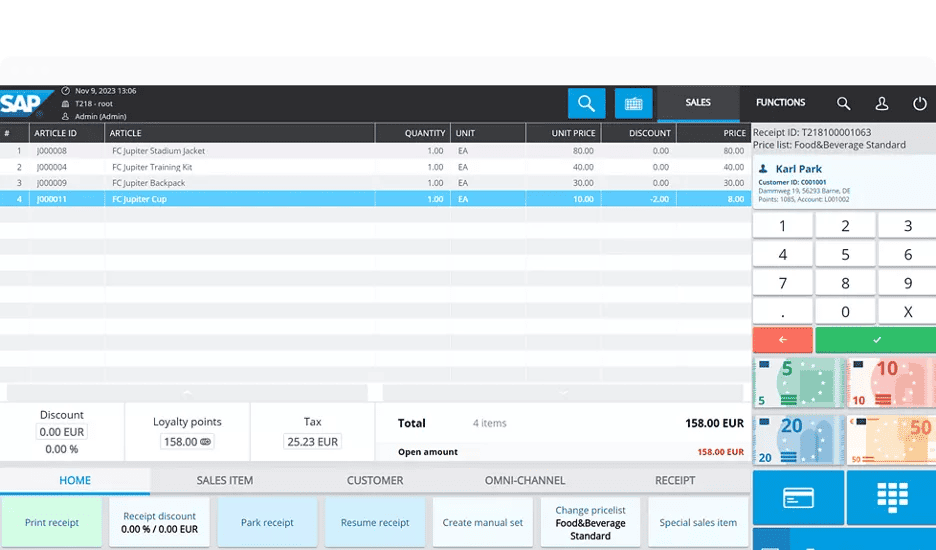
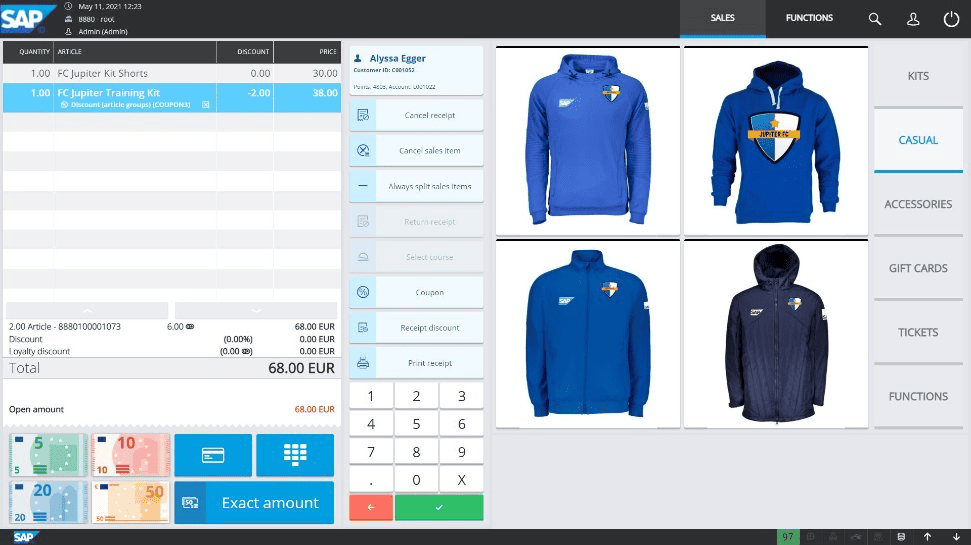
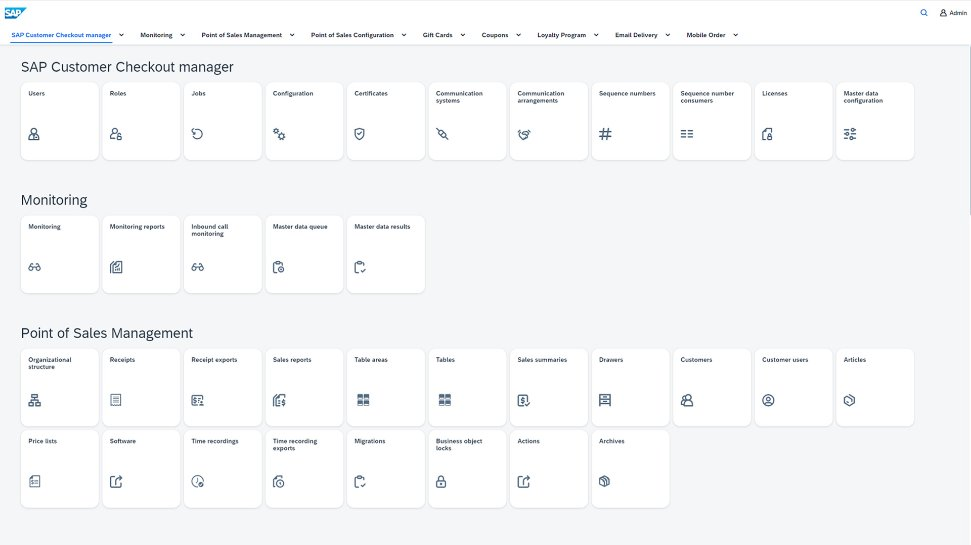
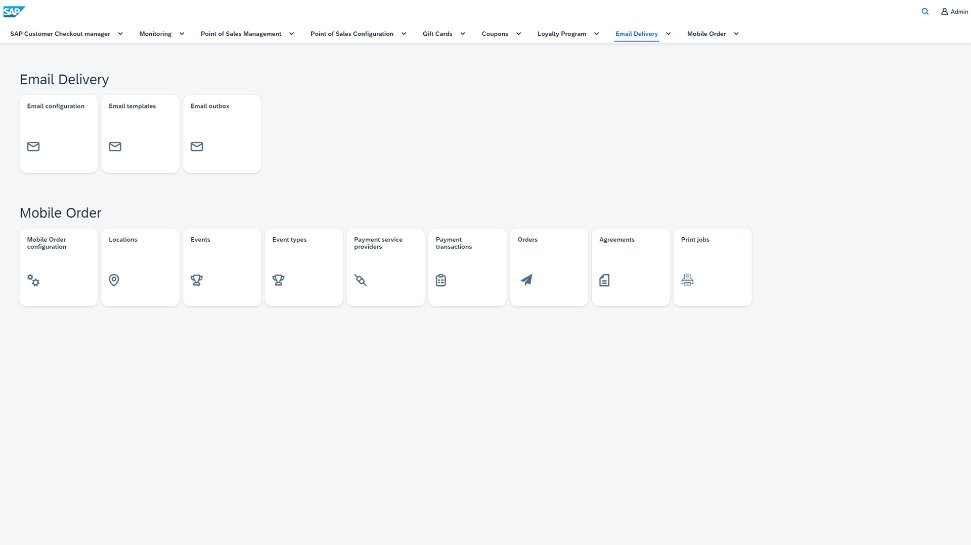
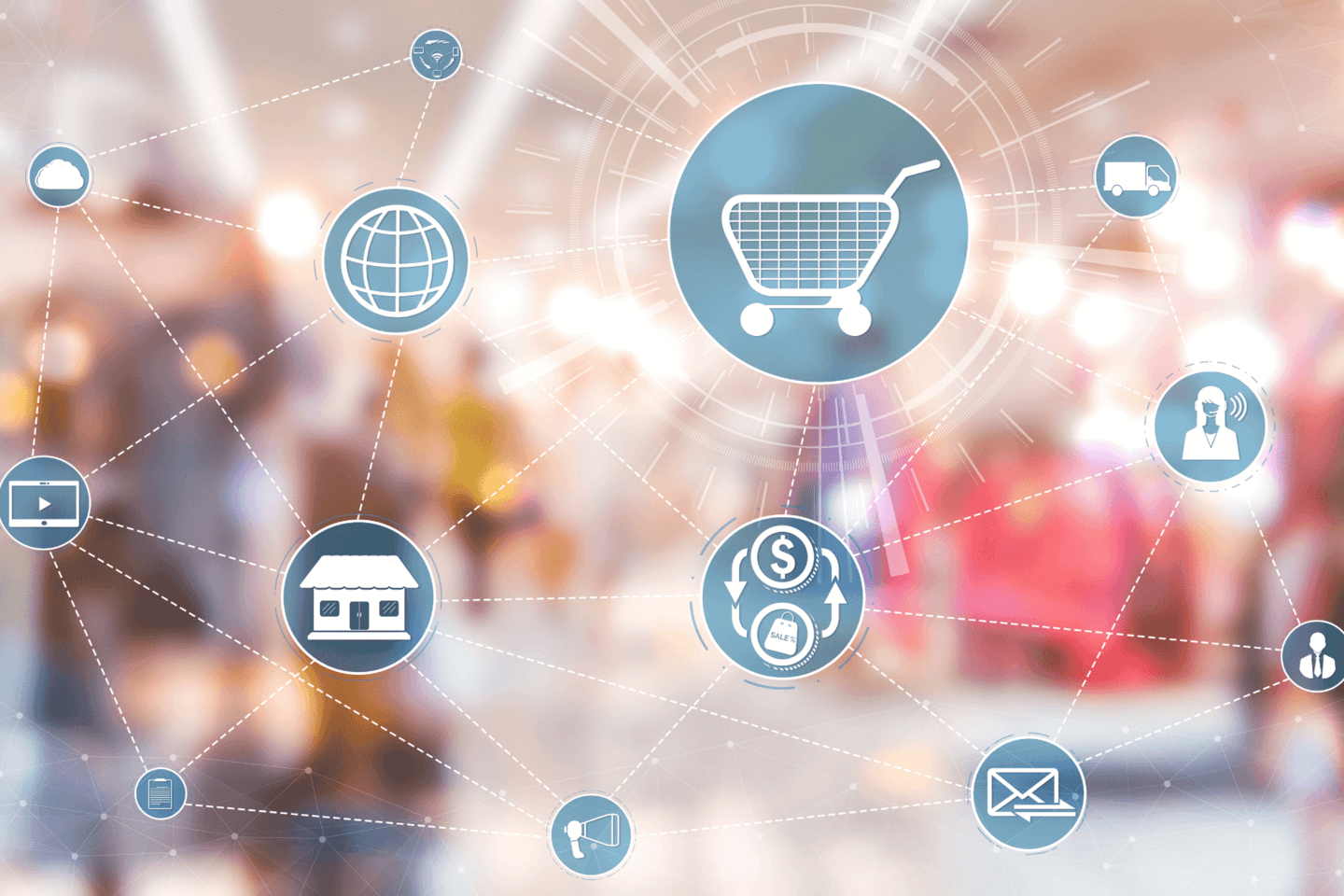
Our omni-channel retail solution centers around SAP Business One as the core of the digital enterprise, using the integration framework as middleware to seamlessly connect all retail channels into a single hub. For brick-and-mortar stores, we provide SAP Customer Checkout as the POS solution, allowing for a unified and streamlined operation. Additionally, our approach includes integration capabilities with various e-commerce platforms and marketplaces, ensuring a cohesive retail experience across all channels.

Approximately 21% of retail revenue in North America is expected to be generated via e-commerce in 2025, making it an increasingly important channel for retailers.
As this channel increases in prominence, the importance of integrating your e-commerce with your ERP is critically important to continue to scale and gain efficiency without duplicating efforts.
SAP Business One can integrate with any e-commerce platform or marketplace using the Business One integration framework.
See our Shopify packages solution for a robust understanding of integration capabilities.
An ERP system like SAP Business One integrates your entire organization so that the right hand always knows what the left hand is doing
All orders, whether over the phone, through the POS or e-commerce, all lead back to SAP Business One retail ERP.
Order entry is simple and will default all critical information like addresses, pricing and discounts, requiring only value-added interventions like promotional information.
E-commerce integration, like Shopify or Magento, will automatically bring your online orders into SAP Business One with payment!
Customer Checkout Point of Sale by SAP automatically synchronizes customer profiles, inventory levels, and sales documents. This keeps all your records up to date and relevant!
The supply chain operations team can accurately manage inventory planning by seeing the status of inventory at each location, ensuring that no single location has too much or too little inventory. Launching a new product in-store? No problem, with a centralized view of all your locations and their capacity, you can ensure the right stores get the right combination of information.
The finance department benefits from SAP retail ERP by having all information in one centralized system and working with a complete picture of the business. There is no need to export data from external systems and manually manipulate reports to see the bigger picture.
SAP Business One acts as a centralized data warehouse where all sales information related to your customers is consolidated.
The analytical functionality of an ERP retail system like SAP B1 allows the business to slice and dice information, determine trends over item categories, but also down to a single customer.
SAP Business One can recommend sales items to customers based on customers like them or based on historical items they have already bought.
How Tin Shack Transformed Retail Operations with aclaros & SAP B1
How to Choose the Right ERP Software for Your Retail Business
Choosing the best ERP for retail operations is critical for long-term success. Here are some key considerations to weigh when evaluating software used in retail stores.
→ Inventory and Warehouse Management
- If you have multiple locations, storefronts and warehouses, you need to have a system that can support these logistics.
- If your products come with warranties and require serial numbers and lot tracking, the core ERP system should be able to handle this in accordance with best practices. Automations and mobility in the warehouse will allow your operations team to ensure inventory is always up to date and provide real-time data to your customers.
→ Point of Sale (POS Integration)
- If you require a POS, it is best to use the solution that works natively with the ERP system. Using third-party POS systems can often cause conflict between the ERP functionality and the POS environment, and create discrepancies in data and processes.
→ eCommerce Connectivity
- Integration with eCommerce platforms needs to be scalable and configurable, as the retail industry is constantly changing and adapting to the needs of the end customer. Selecting retail ERP systems with rigid integration will prevent you from adapting.
→ Project Management and Real Time Visibility
- If your business needs real-time insights into sales, margins, inventory, and customer information, prioritize an ERP system that offers comprehensive dashboards and reporting tools.
→ Customization and Extensibility
- If you anticipate that your business workflows will evolve over time, choose an ERP solution that allows for easy customization and extension to meet changing industry demands.
→ Total Cost of Ownership (TCO)
- If you’re comparing retail ERP systems, factor in not just licensing fees, but also implementation, training, and ongoing support costs to understand the complete investment.

Questions to Ask Retail ERP Vendors
Does the Point of Sale work offline in the event of an internet outage?
You never want to be left without the ability to service your customers. With SAP Point of Sale, the system is always available and will synchronize all transactions once connectivity is restored.
Do I have to use the native ERP eCommerce, or can we integrate into best-in-class eCommerce like Shopify, WooCommerce or Magento and marketplaces like Wayfair, Amazon and eBay?
The native eCommerce solutions may be okay in the short term, but are not built for longer-term scalability and are not the core focus of ERP software companies.
Can we support multiple stores or channels?
Understanding where your storefront may require different taxes, configurations and exemptions. Ensure the solution you pick can handle your business needs.
What is the timeline from contract signing to go-live?
Having a clear expectation about how the project will roll out is important for the business, your staff, and your customers!
Common Mistakes to Avoid When Choosing Retail ERP Software
- Letting price be the main deciding factor. Low-cost retail industry software solutions often lead to limited functionality and flexibility in integration. What might sound like a good deal in the short term ends up being a costly decision when its lack of scalability causes inefficiencies.
- Overlooking Integration Data Flow. Have a clear understanding of your business process independent of the systems, and map them out. Use this as your baseline when you start to evaluate retail ERP solutions to help guide your decision-making.
- Lack of long-term vision. An ERP that does not have a long-term vision for its product or client will inevitably require a migration to a different vendor and a different system. SAP Business One has the largest global customer base and continues to grow and expand the product, ensuring that you will always have a solution in the SAP suite of products.
Partner with aclaros for Streamlined SAP Retail Solutions
aclaros, the only Platinum Partner of SAP Business One in North America, was the first partner in Canada to localize SAP Customer Checkout for the local market. We intimately understand the capabilities of the retail solutions like SAP Customer Checkout and eCommerce platforms like Shopify, Magento, WooCommerce and various marketplaces. With our deep knowledge of SAP Business One and the middleware technology that connects it all, we are uniquely positioned to support and resolve your business needs now and into the future.
Join the many retail businesses that already trust aclaros and SAP Business One to power their sales—online and in-store. As leading retail ERP vendors, we connect every part of your retail engine, from eCommerce to digital marketplaces to your physical storefront.


FAQs
What is ERP in retail?
Point of Sale (POS) IntegrationERP in retail refers to Enterprise Resource Planning software specifically designed to help retail businesses manage and integrate their core operations, such as inventory management, sales, customer data, purchasing, finance, and supply chain, into a single unified system.
Retail ERP systems like SAP Business One act like the central hub that connects all the sales channels like Point of Sale, eCommerce, Marketplace (Amazon, Wayfair, eBay etc.) with the other departments of the business like inventory, supply chain and financials to integrate seamlessly and avoid duplication of data entry or effort.
How is ERP used in retail?
ERP is used in retail by ensuring that the transactions and operations that happen in the retail aspect of the business have real-time information while simultaneously synchronizing the information to a centralized system for back office operations.
What ERP system does Walmart use?
Walmart, the largest retailer in the world, has built their own proprietary Point of Sale solution, which means it is customized for its organization. Understanding that Walmart is a multi-billion-dollar company, they have deep pockets and can not only develop but also support their own internally built solutions. Most companies on their way to becoming a billion-dollar business rely on SAP Business One and Customer Check Out to support their retail operations.8
How will ERP help me manage inventory better and avoid stockouts or overstocking?
SAP ERP for retail maintains real-time inventory management and tracking, so there is never a question of the status of the inventory. Replenishment recommendations and intelligent forecasting, along with integrations to your sales channels, provide a centralized perspective on inventory across the business.
Can a SAP retail ERP handle my multi-channel business—brick-and-mortar, online, and wholesale—without needing multiple systems?
SAP Business One integrates seamlessly into all your sales channels, from Point of Sales for the brick-and-mortar business to online marketplaces like Amazon to the digital eCommerce stores. This unifies the order management and supports B2C and B2B sales processes.
How easy is it to scale into new stores, new channels, and new geographies?
SAP Business One is localized for over 50 different countries, 28 languages and can handle multi-currency, multi-language and mult-location with ease. Built-in tax localization makes deployment in a new location a rollout rather than a development project.